The Economic Logic That Politics Refuses
Carbon pricing has the closest thing to consensus among economists studying climate policy. Put a price on carbon emissions, let markets find the most efficient ways to reduce them, and watch innovation flourish as businesses compete to avoid the cost. The logic is clean, almost irresistible in its simplicity. Yet this economic consensus crashes repeatedly against political reality, leaving us with a growing pile of failed carbon tax initiatives and struggling cap-and-trade systems.
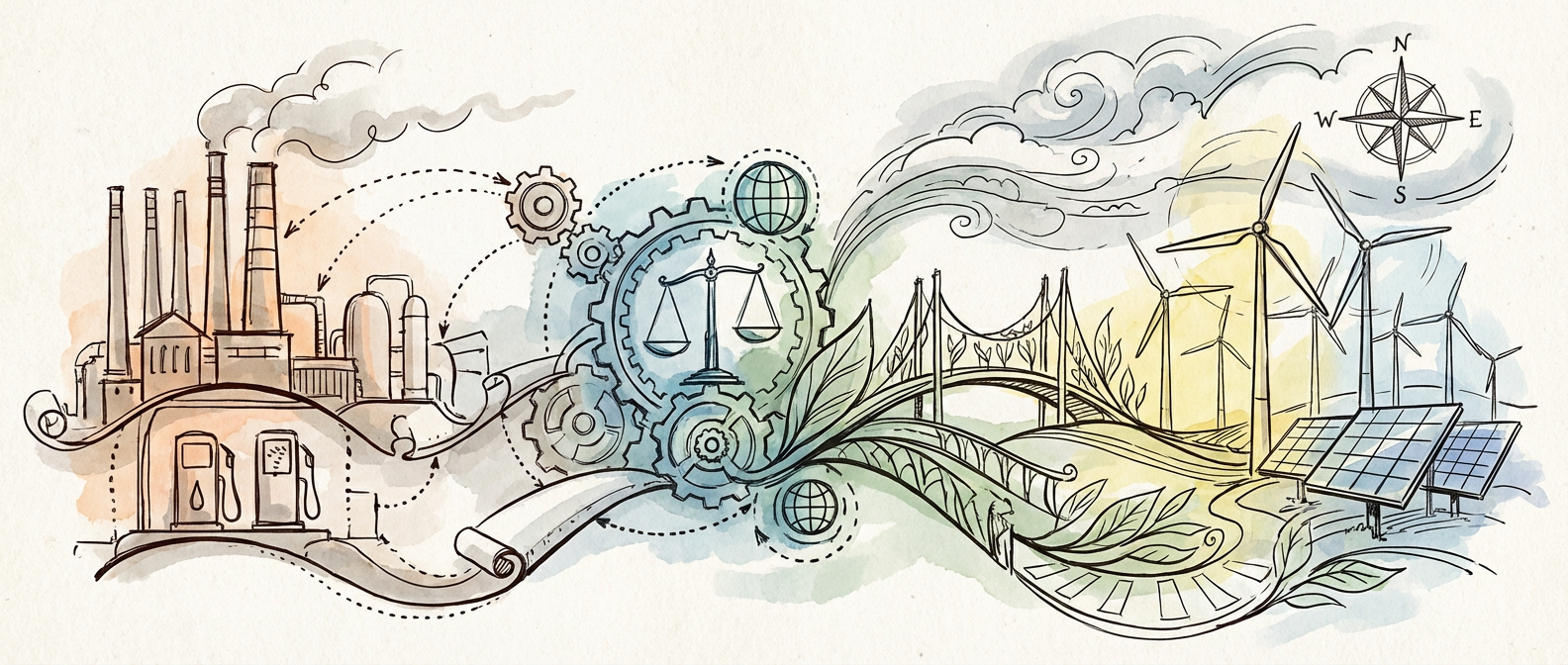
The disconnect runs deeper than typical policy disagreements. We’re not just watching interest groups battle over details. Carbon pricing reveals a basic tension between how economists think about problems and how democratic politics actually works. Markets excel at finding efficient solutions when the rules are clear and stable. Politics excels at building coalitions and managing competing claims on public resources. These two systems operate on completely different timescales and respond to different incentives.
Consider Washington State’s recent experience. Voters rejected carbon tax initiatives in 2016 and 2018, despite relatively modest proposed rates and revenue recycling mechanisms designed to address regressivity concerns. The failure wasn’t because of climate denial or even economic hardship arguments. Instead, progressive environmental groups opposed the 2016 measure as not ambitious enough, while the 2018 version collapsed under the weight of competing demands from various constituencies who wanted their priorities funded with carbon revenue.

The Coalition Mathematics Problem
Carbon pricing’s political weakness comes from its economic strength. By design, these policies create diffuse benefits and concentrated costs. Everyone shares in reduced climate risk, but specific industries, regions, and income groups bear immediate, visible expenses. This asymmetry makes coalition-building extraordinarily difficult, especially compared to traditional environmental regulations that typically target particular sectors or pollutants.
The math gets worse when we examine voting patterns. Rural and working-class communities often face higher energy costs as a percentage of income, making them sensitive to price increases regardless of rebate mechanisms. Meanwhile, the primary beneficiaries of climate action include future generations and populations in developing countries who cannot vote in domestic elections. This temporal and geographical mismatch between costs and benefits creates what political scientists call a “representation gap.”
Even within environmental coalitions, carbon pricing generates internal tensions. Direct regulation advocates worry that pricing mechanisms might delay or replace more aggressive standards. Environmental justice groups question whether market-based solutions properly address cumulative impacts in frontline communities. Clean energy companies sometimes prefer targeted subsidies over broad-based pricing that might reduce overall energy demand. These divisions matter because successful climate policies require sustained political support across multiple election cycles.
The Regulatory Alternative’s Hidden Costs
Frustrated by carbon pricing’s political failures, many jurisdictions have turned to regulatory approaches: renewable portfolio standards, appliance efficiency mandates, building codes, and vehicle emissions requirements. These policies often prove more politically durable because they embed costs in complex ways that make attribution difficult. When electricity bills rise because of renewable mandates, consumers typically blame utilities rather than environmental policies.
However, this political durability comes with significant economic trade-offs. Regulatory approaches sacrifice efficiency for feasibility, often producing higher compliance costs and slower innovation rates than equivalent carbon pricing systems. California’s climate policies illustrate this tension clearly. The state has achieved impressive emissions reductions through aggressive regulations, but residential electricity rates have risen much faster than the national average, creating affordability concerns that threaten long-term political support.
The efficiency losses multiply across jurisdictions. Without price signals that reflect true climate costs, businesses and consumers lack clear guidance for long-term investment decisions. Electric vehicle subsidies might accelerate adoption in wealthy communities while doing little to retire high-emission vehicles in secondary markets. Building efficiency standards might drive up housing costs in supply-constrained markets. Each individual regulation might make sense, but the cumulative effect can be economically distortive and politically unsustainable.
Institutional Design and Democratic Legitimacy
The carbon pricing debate reflects deeper questions about institutional design in democratic societies. Should we prioritize economic efficiency or political sustainability? Can we design institutions that capture markets’ allocative advantages while maintaining democratic accountability? These questions become more urgent as climate deadlines approach and political windows narrow.
Some jurisdictions have attempted hybrid approaches that split the difference. The Regional Greenhouse Gas Initiative in the northeastern United States combines cap-and-trade mechanisms with revenue recycling and complementary regulations. British Columbia initially succeeded with carbon tax policies that included broad-based tax cuts and maintained bipartisan support until political dynamics shifted. These examples suggest that institutional design matters enormously, but they also demonstrate how fragile these arrangements can be when electoral coalitions change.
The legitimacy question cuts both ways. Carbon pricing advocates argue that democratic institutions should not override expert consensus on policy design, especially when future generations bear the consequences of inefficient choices. Critics respond that policies lacking broad public support risk backlash that could undermine climate progress altogether. Both positions contain important truths that resist easy resolution.
Beyond the Either-Or Framework
Maybe the real lesson from carbon pricing’s political struggles is that climate policy cannot rely on any single instrument, regardless of its theoretical appeal. The scale and urgency of climate challenges demand policy portfolios that combine economic efficiency with political sustainability, even when these goals sometimes conflict.
This might mean accepting regulatory approaches in sectors where political economy factors make pricing impossible, while pursuing carbon pricing where political conditions are more favorable. It might mean designing policies that evolve over time, beginning with approaches that build political support and moving toward more efficient instruments as coalitions strengthen. Most importantly, it means taking seriously the insight that technical policy design cannot be separated from political strategy.
The path forward requires honest acknowledgment that our most clean policy tools might not always be our most effective ones in practice. What aspects of this analysis resonate with your own observations about climate policy debates? Where do you see opportunities for building more durable political coalitions around effective climate action?