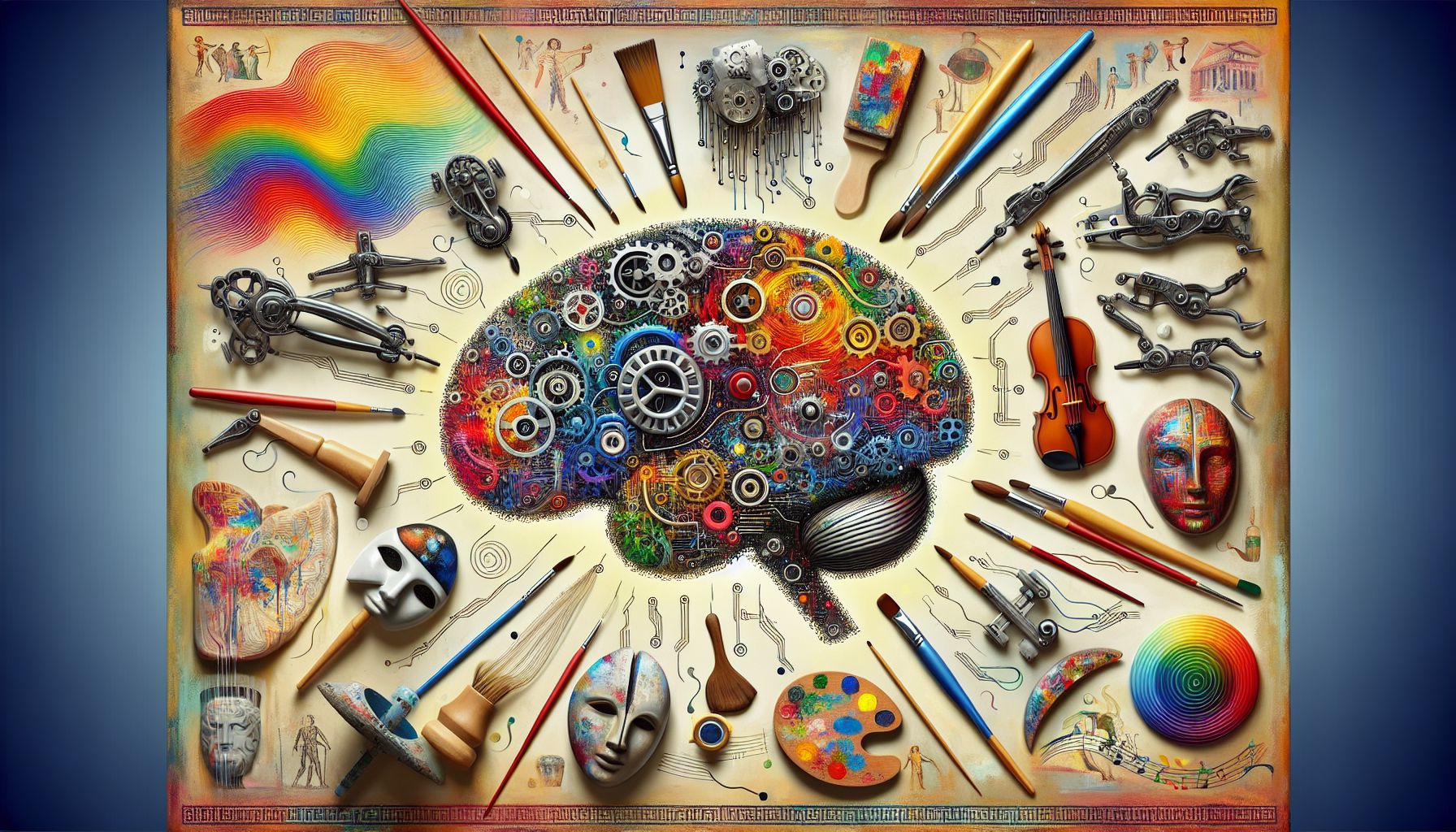
How about a deep dive into a realm where tech meets art, where AI is no longer just churning data sets but creating masterpieces? Yep, I’m talking about Artificial Intelligence in the creative arts. It’s an exciting space where algorithms and brush strokes collide. Let’s explore how AI is reshaping the arts and why you should be excited, and maybe a tad nervous, about this techno-utopian twist.
A Brush with Algorithms
Picture this: I’m lounging in my worn-out chair, sipping coffee, and scrolling through digital art on my tablet, like any other night. Except, every so often, I stumble upon an artwork that looks like it has been meticulously painted by a master artist from the 19th century. Nope, not this time. It’s an AI-driven platform like DALL-E or DeepArt that’s behind the creation, wielding its algorithms like a paintbrush across a digital canvas.
AI in the arts isn’t just about replicating famous paintings or styles. It’s about creating entirely new possibilities. Imagine a neural network that designs an art piece based on the mood of your favorite song or one that conjures a Shakespearean sonnet in a style that’s one part existential crisis and two parts tech wizardry. The creative potential here is endless.
The Rise of AI Collaborators
Let’s talk collaborators. In this new world, the next Picassos and Beethovens might well be digital. Take, for instance, artist Mario Klingemann working with a GAN (Generative Adversarial Network), who created AI-generated portraits that made waves in the art community. It’s not about AI taking over but teaming up with humans to push creative boundaries.
What makes this special (and totally not terrifying) is how AI artists work. Unlike a paintbrush or a piano, which just sit there until you play them, AI can actively analyze trends, suggest new directions, and experiment with forms that we mere mortals might never consider. It’s like having a muse that’s as curious about what comes next as you are.
The Breaking Down of Creative Barriers
The creative arts used to be gated communities—understandable for only a select few with their high-brow knowledge and inaccessible lexicon. But AI is changing that. Platforms like RunwayML allow anyone with a laptop and a vision to dip their toes into digital artistry. Now, even those who can’t color within the lines (guilty!) can start creating.
But it’s not just about accessibility; it’s also about creating new genres. Interactive art installations become richer when AI can bring them alive based on audience interactions. Imagine a gallery where the pieces change based on who’s looking at them or a VR experience that adapts based on your emotions. This is not some far-off Black Mirror episode; it’s happening now.
A Canvas for Ethical Considerations
Ah, ethics, the elephant in every technological room. Just because we can, doesn’t mean we should. One of the most interesting aspects of AI in the arts is the ethical landscape it paints. Who owns AI-generated art? Is it the coder, the machine, or the individuals whose data fed the algorithm?
Moreover, biases in algorithms could creep into the creative process, too. If our data sets are unbalanced, our AI art might end up perpetuating stereotypes. As awe-inspiring as this tech gets, we need to stay grounded in ethical practices.
What Does the Future Hold?
This is where we get to have a bit of fun—speculating what might be in store for AI in creative arts. We could see AI curators choosing and arranging museum exhibits or composing entire symphonies for virtual orchestras. Or how about an AI novelist whose books evolve with each read, offering a different story every time you open its pages?
AI isn’t just helping create art; it’s redefining what art could be. Imagine AI-generated experiences within the Metaverse or digitally-enhanced theater performances that change every night based on audience feedback. These futuristic visions aren’t just pie-in-the-sky ideas; they’re close to becoming reality.
A Final Brushstroke
As I sit back and watch the art world evolve with every new line of code, I’m struck by the realization that AI is both an ancient artist’s nemesis and their muse. It doesn’t threaten to erase the human element of creativity; rather, it expands the playground for it. This new partnership between neurons and neural networks creates a path that could yield masterworks as profound as the Sistine Chapel—all at the click of a button.
While I plaster my walls with AI-generated art that seems otherworldly yet familiar, I remain excited. This techno-utopian horizon in creative arts isn’t just endless; it’s fascinating. Let’s keep an eye on it together, watching it with curiosity, caution, and boundless creativity.