The Paradox of Democratic Judicial Reform
Mexico’s judicial overhaul is a mess of contradictions that gets to the core of how democracy actually works. How do you make democratic an institution that’s supposed to stay away from democratic pressures? President Claudia Sheinbaum’s administration answered with typical boldness: put every federal judge on the ballot in June 2026. The Mexican Constitutional Amendment Text passed with 83% legislative approval in September 2025, but it’s created the biggest institutional crisis in Mexico’s modern democratic history.

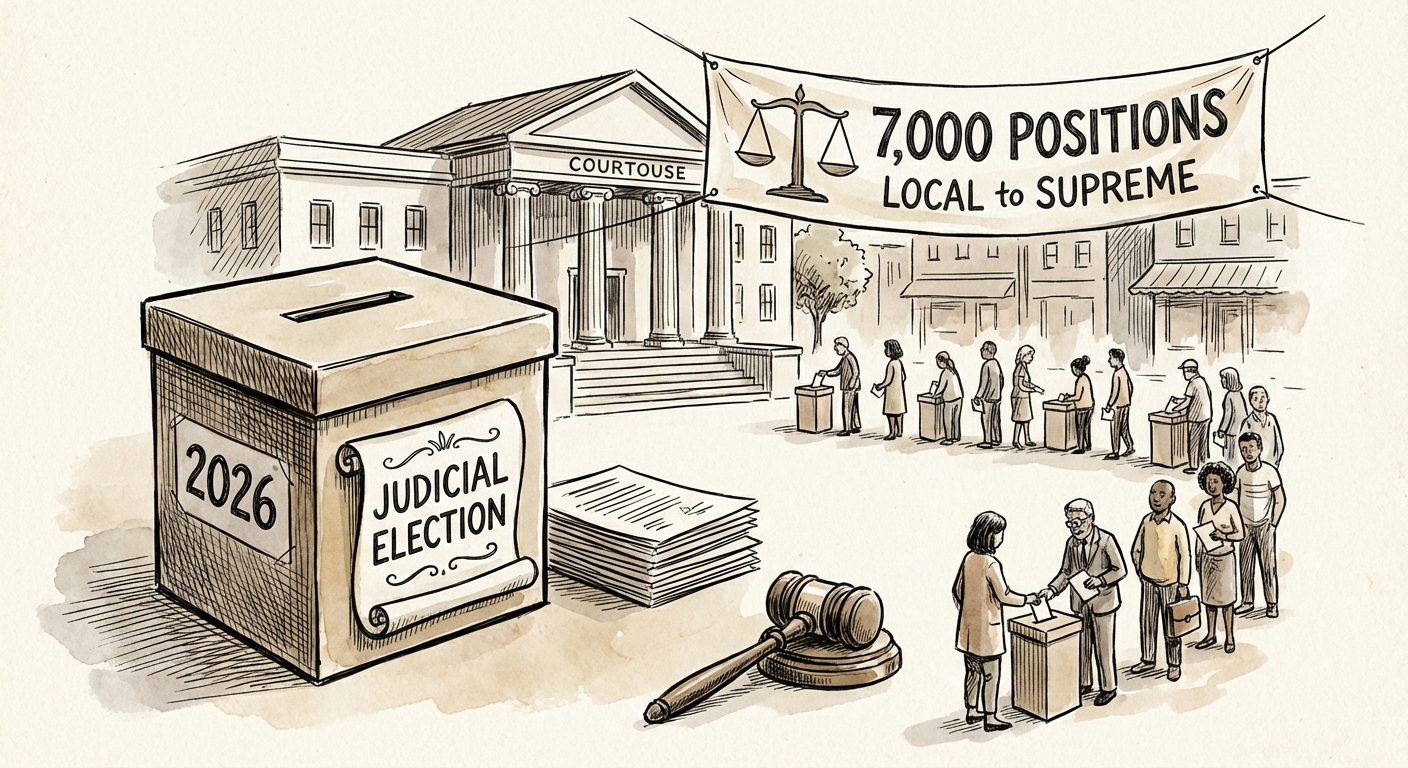
The numbers are staggering. Seven thousand judicial positions on one ballot. The government allocated 12 billion pesos (roughly $650 million) to run this through the National Electoral Institute. Nearly a quarter of current federal judges quit rather than face election. These aren’t just logistical headaches. This is what happens when two completely different ideas about legitimacy crash into each other.
Here’s what makes this crisis so messy: both sides have democratic legitimacy. The reform has 68% public approval—real popular support for change. But the Mexican Supreme Court’s opposition and the mass judicial resignations point to serious rule-of-law concerns that can’t be dismissed as elite whining. This isn’t progressive change meeting conservative resistance. It’s a genuine constitutional puzzle with no clear democratic precedent.
The Case for Electoral Legitimacy
The pro-election argument makes sense. Mexico’s current system has produced a federal bench that many citizens see as out of touch. That 83% legislative approval reflects decades of frustration with a judiciary perceived as serving elite interests over popular justice. When judges make decisions that affect your life, shouldn’t you get a say in picking them?
The reform’s popularity isn’t just populist noise. Mexican voters have consistently expressed dissatisfaction with judicial performance, especially regarding corruption and responsiveness. The Sheinbaum administration argues electoral accountability will force judges to stay connected to their communities while reducing the influence of political networks that have controlled judicial appointments.
Several U.S. states elect judges, so this approach isn’t inherently anti-democratic. Elected judges can still make unpopular but legally correct decisions—they just have to explain those decisions to voters instead of appointing authorities. This transparency might actually strengthen judicial legitimacy.
The Independence Imperative
The opposition argument rests on equally solid ground. The Inter-American Commission on Human Rights Statement expressing concern about judicial independence reflects widespread worry among legal scholars and international observers. Courts must often protect minority rights against majority preferences—exactly the kind of decisions that electoral pressure might discourage.
The mass judicial resignations—23% of the current bench—represent more than institutional stubbornness. These judges argue their departure preserves judicial independence by refusing to participate in a system that makes legal reasoning secondary to electoral considerations. Their concern goes beyond personal careers to whether courts can effectively check legislative and executive power when judges need popular approval to keep their jobs.
The timing creates immediate problems that reveal deeper structural issues. With thousands of judicial positions vacant or soon vacant, Mexico faces serious delays in case resolution and potential constitutional crises if key legal challenges can’t get timely hearings. This disruption tests whether electoral democracy can effectively manage the transition to a new judicial selection model.
International Context and Democratic Innovation
Mexico is trying something genuinely new in democratic governance. While some U.S. states elect judges, no major democracy has attempted to democratize its entire federal judiciary simultaneously. This makes Mexico’s experiment both fascinating and risky—there are few precedents to guide implementation or predict outcomes.
International criticism focuses mainly on judicial independence concerns, but these concerns must be weighed against legitimate questions about judicial accountability in democratic systems. The Inter-American Commission’s statement reflects established international norms, but those norms developed when appointed judiciaries generally enjoyed public confidence. Mexico’s situation suggests traditional approaches to judicial independence may need adaptation when courts lose popular legitimacy.
The global rise of populist movements complicates judicial reform discussions by making any criticism of elite institutions politically suspect. But Mexico’s case differs from typical populist challenges because it operates through constitutional amendment rather than executive pressure or legislative intimidation. This procedural legitimacy strengthens the reform’s democratic credentials while raising new questions about the limits of constitutional change in democratic societies.
Synthesis and Democratic Stakes
Honestly? Both sides have merit, and Mexico must now deal with the consequences of its choice. The reform is a bold attempt to reconcile democratic accountability with judicial independence. It might succeed in creating a more responsive and legitimate judiciary. Or it might undermine the rule of law in pursuit of popular governance. The outcome depends largely on implementation details and how newly elected judges handle their first major constitutional challenges.
What’s clear is that modern democracies face real tensions between accountability and independence that have no perfect solutions. Mexico’s experiment will provide crucial evidence about whether electoral democracy can extend to judicial selection without sacrificing the core functions courts must perform in constitutional systems.
The stakes go far beyond Mexico. Success could inspire similar reforms in other democracies struggling with judicial legitimacy questions. Failure could reinforce arguments for traditional judicial independence models while potentially destabilizing one of Latin America’s most important democratic institutions. Either way, this will influence global discussions about democracy, accountability, and the rule of law for decades.